Wednesday, July 7, 2010

Loff, loff, loff.


Daniel made an impromptu trip down Thursday for a dinner picnic in Balboa Park.


I was very, very happy about this.


Daniel brought sandwiches from Con Pane and dark chocolate with toffee.


That's the Cabrillo Bridge in the background. We're going to find all the bridges in San Diego, I just know it.
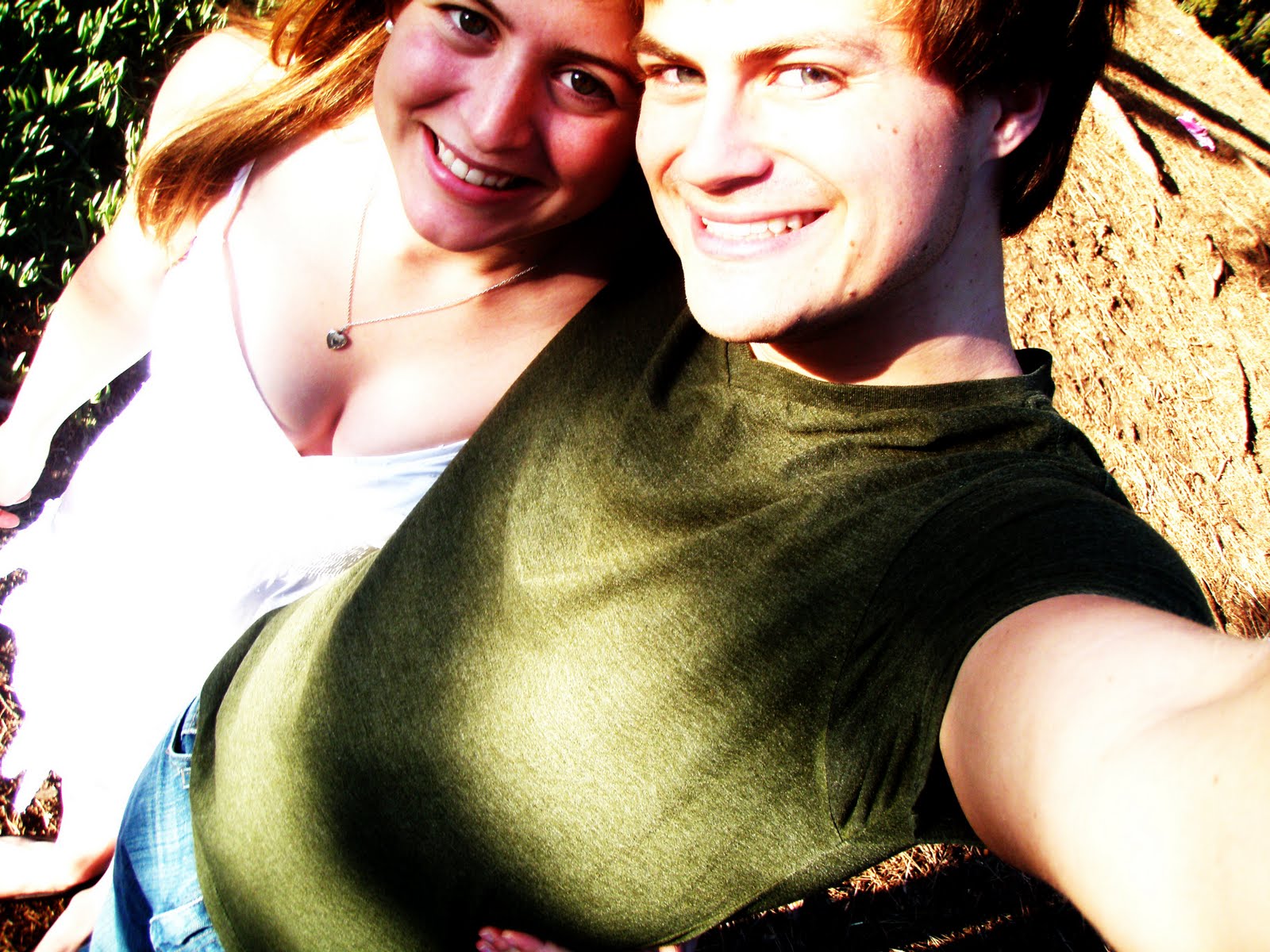


We frolicked in the gardens while the sun set. Really. We frolic when nobody's looking.


Balboa is like the San Diego Central Park. You'd never know we were in the middle of a city. Until you noticed the freeway drone just beyond the redwoods.


I'm telling you, we're going to find all the bridges. We stumbled upon this one in the canyon behind Cafe Bassam. That's what happens when you get coffee only at night—you miss the Maple Canyon bridge.


Daniel then took me up to the top of the Hotel St. James, which is a PLNU thing I hadn't done in my three years, making it high time.


And the views of downtown were spectacular.


It was a spontaneous and beautiful evening, filled with things I loff:)

Tuesday, July 6, 2010

Angelica's birthday festivities, part I.


For Angelica's actual day of birth, we dressed up and tottered on heels (well, I did, at least) to the Cheesecake Factory. I like how our lineup here is like a band, Mahogany and the Light Brunettes or something.


Daniel was fortuitously in the city for a meeting with a politician for whom he had interned during a state senate election (to discuss the homeless initiative ideas we viewed at the architecture show), so he was already in a suit. This was fortunate, because it's normally impossible to get Daniel into anything besides a t-shirt and shorts:)


Angelica loves dressing up, and she loves chocolate. This was a good choice.


What a cute and delicious table.


Composition demanded that I be in the middle. Should have worn black.


And Angelica's birthday festivities continued into the weekend, as well they should have. A post-post is forthcoming.

Monday, July 5, 2010

The rest is history.


On our last June Saturday, Daniel and I were driving through San Diego neighborhoods with no aim in particular, weaving up and down old hills with spectacular views and custom houses that alternately look vaguely European and vaguely Cape Cod and definitely modernist, when we took a turn that planted us right in the middle of the Mission San Diego de Alcalá, which, as you'll discover if you google it, is California's First Church.


We actually see it every Sunday off the 8 when we drive to church, and we had thrown out vague aspirations to check it out at some point, but our inadvertent stumbling-upon was the sufficiently serendipitous occasion we needed.


The grounds were well maintained, and the lushness provided a buffer from the city that spread out below the mission's hill.


One of the mission's artifacts: a wine press used for Eucharist for hundreds of years.


This is one of the few places in California where you're confronted with the weight of years that make up human history. As the West Coast Plymouth, San Diego can exhibit at times its three centuries of European colonization. But the Europeans (and South Americans, and Asians, and Africans) themselves often live among millennia of visible civilizations. Our native North Americans left very few traces to remind us of our brevity, and the subsequent urbanization of our area lends a permanency we'd do well to divest ourselves of.


This was our first summer Saturday without our fantastic routine: church distribution, fun activity, philosophy class. After a fairly busy July, we might get back into the first two, but my nerdiness will sorely miss the philosophy class.


The mission was surrounded by paths that wound around the hill.


We took a couple of them.


We later resumed our San Diego exploration, happening upon a street with my name on it—literally. We're not the first Barrs in California, and I'm sure we won't be the last.

Saturday, July 3, 2010

Open Mind, Open Heart by Thomas Keating


It sounds like a strange self-help book, and on a lot of levels it seems like a strange self-help book, but Keating is striving for something deeper, and at moments he achieves it. A proponent of contemplative prayer, Keating was instrumental in reestablishing a mode of Christian worship that had been lost in all the Enlightenment mess for hundreds of years. Keating's description of the practice is simple: Spend twenty to thirty minutes twice a day clearing your mind of thoughts. That's it. It's not a visionary or ecstatic experience: "What is the essence of contemplative prayer? The way of pure faith. Nothing else. You do not have to feel it, but you have to practice it" (11).

Keating is at times trite and spacey, but he drifts into clarity and insight at moments: "Contemplative prayer is a way of tuning into a fuller level of reality that is always present and in which we are invited to participate" (37). He draws on the disciples' waiting in the garden: "Jesus said, 'Watch and pray.' This is what we are doing in centering prayer. Watching is just enough activity to stay altert. Praying is opening to God" (39). And he says the effects of this practice are subtle but life-altering: "[Y]ou must look for the fruit in your ordinary daily life, after a month or two. If you are becoming more patient with others, more at ease with yourself, if you shout less often or less loudly at the children, feel less hurt if the family complains about your cooking—all these are signs that another set of values is beginning to operate in you" (38-39).

Keating's emphasis on the everyday, his deep conviction that the contemplative life does not need to be lived out in a cloister, pushes forward the immediacy of his thought. And despite the looseness and the therapyness (and the spotty copyediting), he at times almost convinces me:

"The union that one discovers in contemplative prayer will not be reserved to that time. Moments of silence will overtake you in the course of daily life. Reality will tend to become more transparent. Its divine Source will shine through it. . . . As the unconscious is emptied out, the awareness of the deepest level in us is also an awareness of the deepest level in everyone else. This is the basis for the commandment to love one's neighbor as oneself. . . . Augustine had a phrase for it: 'One Christ loving himself.' That is a good description of a mature Christian community. You are aware that a power greater than you is doing everything. Then everything begins to reflect not only its own beauty but also the beauty of its Source. . . . Divine love is not an attitude that one puts on like a cloak. It is rather the right way to respond to reality. It is the right relationship to being, including our own being" (102-103).

Thursday, July 1, 2010

Afternoon commute.


I love the sparkle days, the glittering expanse of ripples on a giant’s salt sea pond, and the water conversations of unperturbed paddleboarders that float up to me as I walk home.

Monday, June 28, 2010

Longitude: The True Story of a Lone Genius Who Solved the Greatest Scientific Problem of His Time by Dava Sobel


This was a quick read that merits at least a quick review. I started the book a month ago at the recommendation of my friend Barbara, and then had to shelve it as I read all that philosophy that's posted below, but post-class the catch-up was fairly brief.

Sobel chronicles a chronological development of a chronometric device that could tell time across an ocean (only for a book about clocks could you write such a sentence). She pulls in little historical details that add life and depth to John Harrison's obscure struggle to gain recognition and a 20,000-pound prize for his inventions.

I think one of the images that will stick with me from Sobel's book is her description of the first clock Harrison crafted, as a country carpenter in his teens:

"It is constructed almost entirely of wood. This is a carpenter's clock, with oak wheels and boxwood axles connected and impelled by small amounts of brass and steel. Harrison, ever practical and resourceful, took what materials came to hand, and handled them very well. The wooden teeth of the wheels never snapped off with normal wear but defied destruction by their design, which let them draw strength from the grain pattern of the mighty oak" (64).

Monday, June 21, 2010

We're famous! Not really, but the reporter from the U-T really liked us.


June 18, 2010 | Photo by John R. McCutchen

Point Loma Nazarene University students Angelica Barr, Daniel Nadal and Kaitlin Barr look at Shawn Benson's "Requisite Domestic" project which looks at opportunities help the homeless community. Benson's project is part of the New School of Architecture & Design, Graduate Showcase.

Angelica, Daniel, and I stopped downtown Friday evening at the New School of Architecture to see our assistant pastor's master's thesis presentation. We weren't the only ones who thought it was phenomenal. Shawn got a write-up in the San Diego Union-Tribune and we got to be in a featured photo on the U-T website (see above).


I took a couple of pictures of my own. I think we were all amazed, not just at the sophistication and innovation of Shawn's project, but also at the spatial thinking that we had to figure out how to do to comprehend his designs and ideas. We're hoping Shawn will get an audience with the city to have his plans heard.

All of the presentations were impressive, and we milled with the beautiful art people and drank coffee with whipped cream in it and tried to wrap our wordy brains around the image-speak that these architecture students had created. And as we walked the blocks back to our car, we all agreed that Shawn's work had made us see the city differently.

Saturday, June 19, 2010

Graduating at 16 runs in the family.


Angelica and I rushed up to Hemet after work one night last week (in rush hour traffic, of course), but totally made it in time to see the twins graduate.


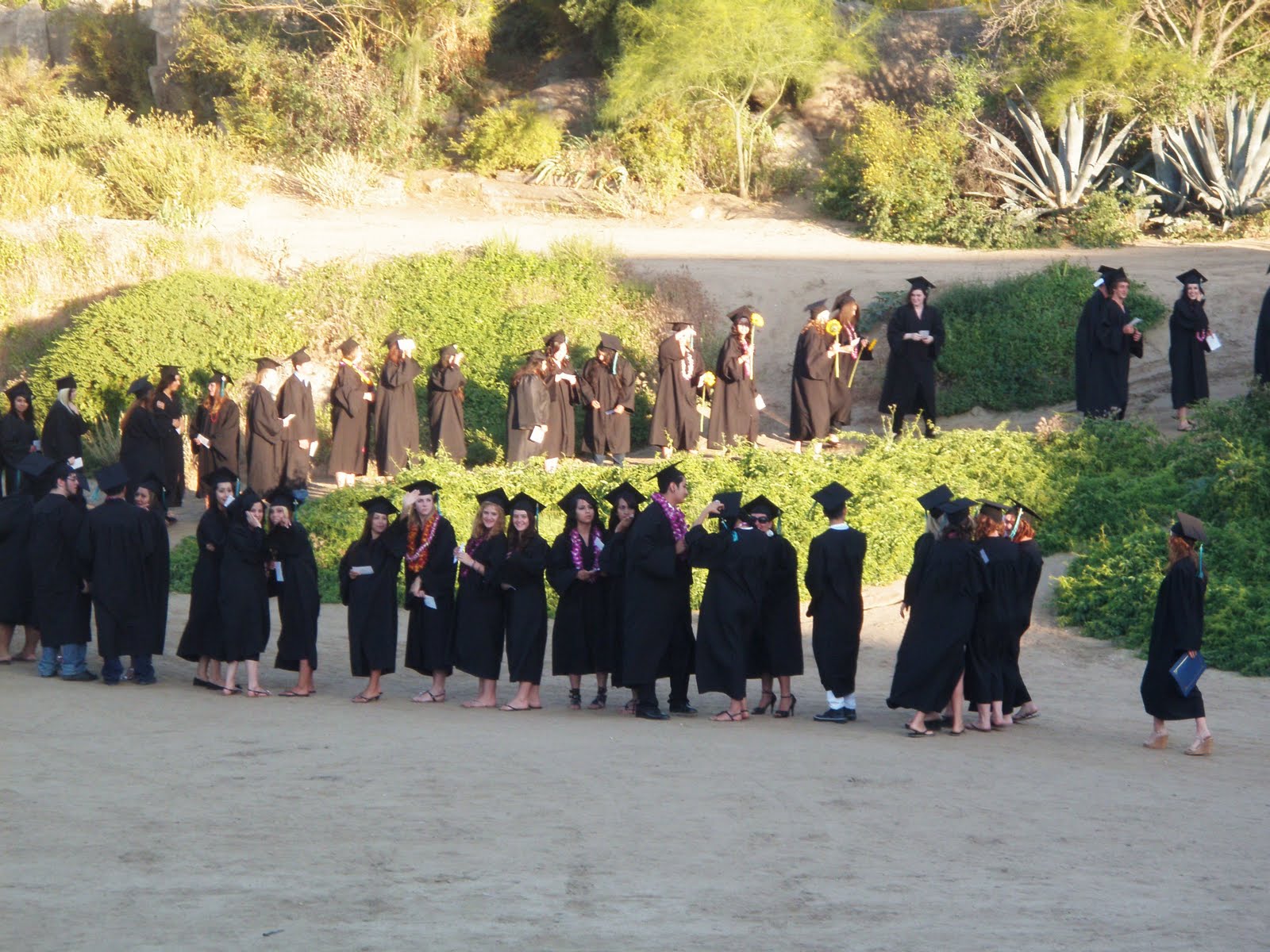
All four of us have now graduated in the Ramona Bowl. It's a familiar sight.


Stepping up to receive their diplomas.


And freshly graduated.


The twins are actually three months younger than I was when I graduated, so they're officially our family's youngest grads.


Mom and Dad are very excited that they got four daughters through high school.


This was our attempt at an awkward family photo. Unfortunately, I'm the only one who's good at being awkward.


And this was our sweet "Can you believe there's four of us?!" picture.


Daniel joined us at our celebratory P.F. Chang's dinner afterward.


Clearly we were the ones who were meant to be twins.


I love this picture purely for its weirdness.

The twins came back to school with Angelica and me, and we tried to show them a Point Loma good time: OB, burritos at the cheapest place we could find, Tuesday night distribution on the streets downtown, yogurt at Figi, Target and thrift stores, dorm time.


Rachel made us egg rolls one night, which we all enjoyed immensely. But oh Young Hall, you are so hard to cook in. Still, what a sweet line-up.